

Eco-Friendly Choices Builders Can Make Without Slowing Down Work
Construction teams deal with tight schedules, long days, and changing weather. In the middle of all this, keeping the site clean and safe becomes tough. But making eco-friendly choices doesn’t slow down the work. In reality, these small habits keep the job running smoothly and cut down on rework after storms.
Most builders think going green means buying expensive tools or changing the entire workflow. That’s not true. Most of the impact comes from simple steps your crew can handle every day. These steps protect nearby drains, parks, and local water bodies — without affecting progress.
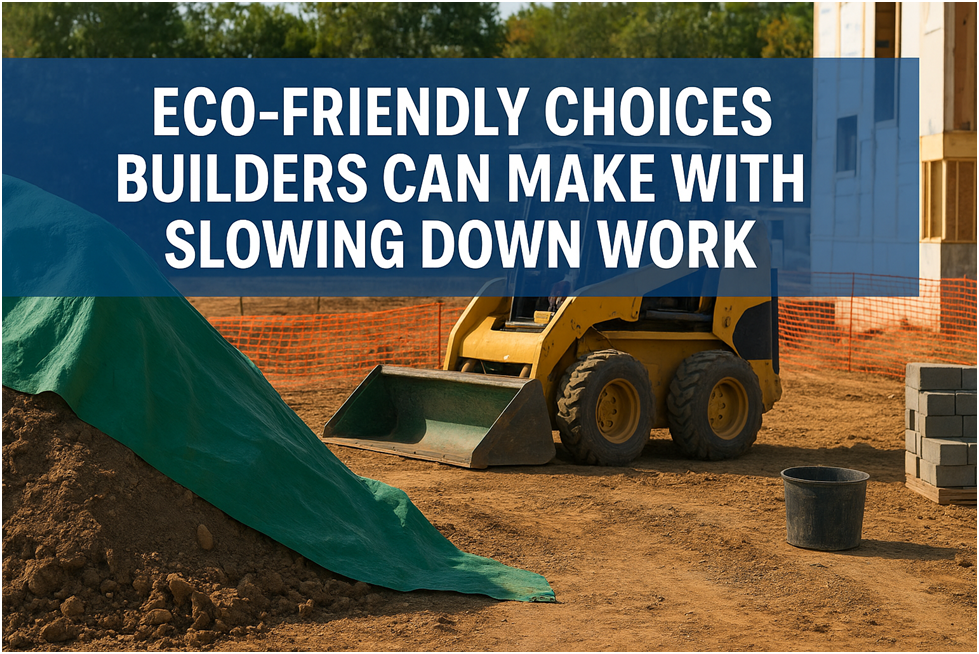
1. Keep Materials Covered and Organized
Rain, wind, and dust can ruin materials fast. When they stay exposed, they wash out, break down, and end up blocking drains.
Simple steps that help:
- Cover soil, cement bags, paint, and chemicals
- Use pallets to keep items off the ground
- Keep all liquids in one marked zone
When the site stays organized, work becomes faster, not slower.
2. Use BMPs That Need Less Maintenance
Some controls fail quickly. Others stay strong for weeks with short check-ins.
Better low-maintenance options include:
- Rock entrances
- Compost socks
- Gravel around storm drains
- Properly installed silt fences
- Fiber rolls
These control erosion, keep mud inside the site, and reduce cleanup after storms.
3. Set Up a Clean Waste Routine
A messy site slows everyone down. A clean site is easier to move through and safer for workers.
Good daily habits:
- Keep different bins for wood, metal, and trash
- Clean tools in a washout area, not on bare soil
- Seal all chemical containers
- Remove trash before it spreads
When waste stays in place, the whole project moves faster.
4. Protect Bare Soil Early
Bare soil is one of the main causes of runoff. Keeping it covered doesn’t take extra time.
Fast soil protection methods:
- Mulch
- Turf blankets
- Ground cover mats
- Temporary gravel paths
- Reusing soil for grading
These simple steps avoid erosion and reduce muddy areas.
5. Choose a Proper Concrete Washout Spot
Concrete washout runoff is one of the worst pollutants on a site.
A good washout spot should have:
- A lined pit or container
- Distance from drains
- Clear signs
- Space for trucks to access easily
This avoids spills and keeps water systems safe.
6. Give Your Crew Short, Clear Instructions
You don’t need long training sessions. A short weekly talk is enough.
Cover things like:
- Where BMPs are placed
- What areas must stay covered
- What to do before a storm
- Spill reporting steps
Clear guidance keeps everyone on the same page.
7. Check Weather and Prepare Early
A few minutes of prep before rain saves hours of cleanup.
Before storms:
- Tighten tarps
- Remove loose trash
- Check barriers
- Cover soil and materials
- Move chemicals indoors
Simple prep prevents serious runoff.
8. Use Equipment in a Smarter Way
Better fuel habits help the site and the budget.
Quick habits that work:
- Turn off idle machines
- Keep tire pressure right
- Plan routes for equipment
- Maintain engines on time
These steps save fuel and reduce fumes around workers.
9. Reuse What You Can
Many materials can be reused without slowing the schedule.
Useful reusables:
- Broken concrete for temporary paths
- Crushed stone for drainage
- Scrap wood for barriers
- Soil for grading
This cuts waste and keeps the site cleaner.
10. Keep Water Flow Under Control
Small changes in site layout make a big difference in where water goes.
Helpful steps:
- Guide water toward stable ground
- Use gravel berms
- Protect drains
- Maintain gentle slopes
- Add simple channels to direct water
These controls reduce muddy washouts.
CONCLUSION
Eco-friendly building isn’t about changing the way you work. It’s about making smart choices that help your team stay quick, safe, and clean on the job. These steps don’t require extra money or slow down progress. They simply keep the site in better shape and protect the community around it.
Written By:
Proswppp.com

Earthing Types | Earthing Procedure and Advantages
13 Components of Building Structure | Building Structure Basic Components

What is Gypsum | Why Gypsum Added to Cement | Uses of Gypsum | Properties of Gypsum
About The Author

John Steffen
I love to share my experience on civil engineering and construction estimates. As a highly capable individual with a strong academic background, I am proud to say that I already possess a comprehensive understanding of the technical elements of civil engineering.